Teachers from four countries train together in the Azores
Teachers from four countries train together in the Azores
Angra do Heroísmo, Azores | June 22–28, 2024
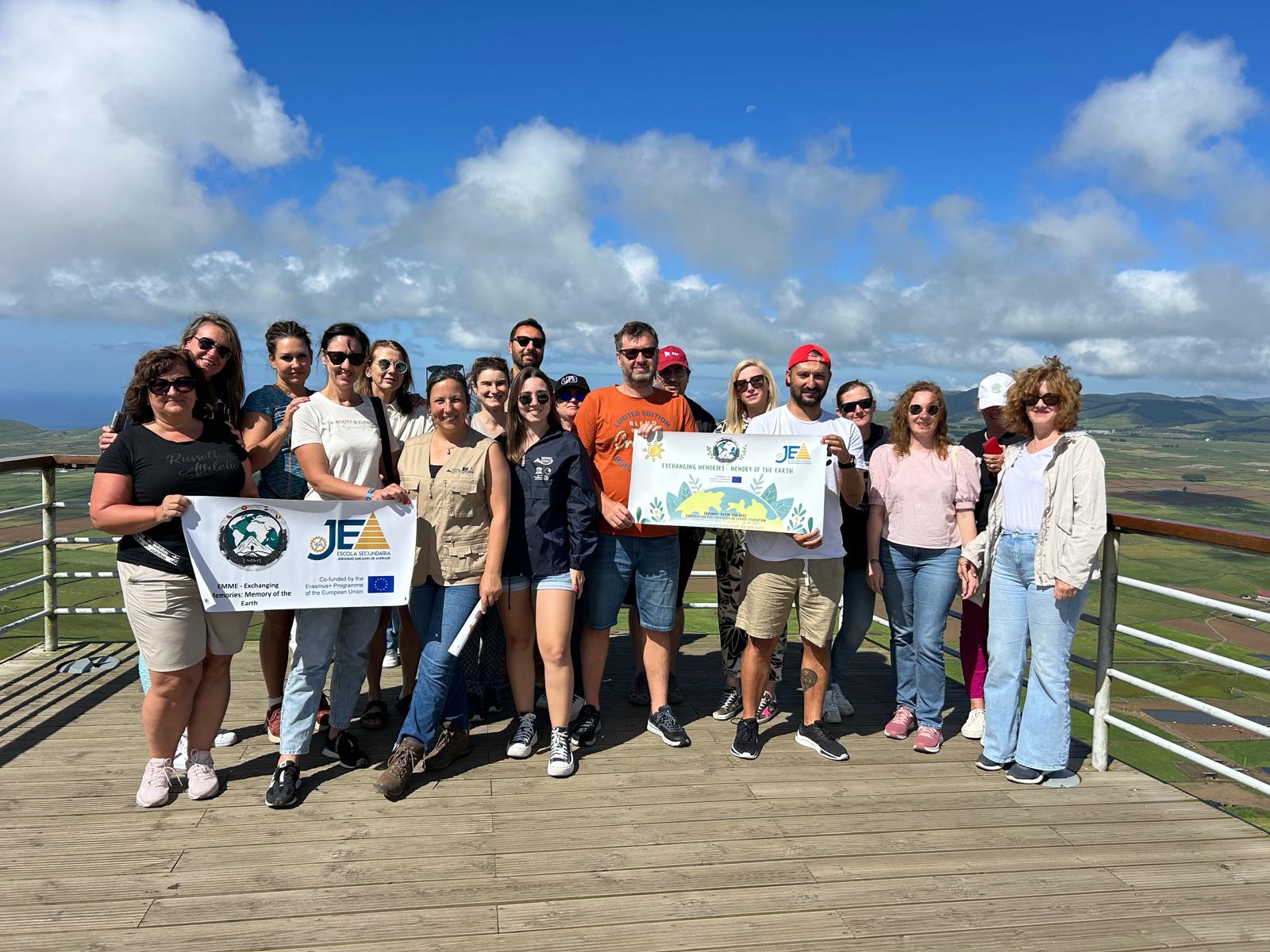
The Erasmus+ project EMME – Exchanging Memories, Memory of the Earth reached a new milestone this June with the successful completion of an international staff training hosted by Escola Secundária Jerónimo Emiliano de Andrade (ESJEA) on Terceira Island, Azores.
Bringing together teachers from Romania, Portugal, Slovakia, and Croatia, the training aimed to deepen the participants’ understanding of the EMME curriculum, which blends geoscience, environmental awareness, and local cultural heritage into a powerful learning experience for students aged 10 to 16.
Set against the stunning volcanic landscape of the Azores, the week-long programme combined theory and fieldwork, offering an immersive exploration of how natural and cultural elements can shape educational practices. Sessions were delivered in partnership with GeoAçores – the Azores UNESCO Global Geopark, which provided scientific insight and guided visits to key geosites including Monte Brasil, Algar do Carvão, Furnas do Enxofre, and Serra do Cume.
The training also included curriculum development workshops, peer learning sessions, and interactive presentations by Portuguese students already piloting the EMME materials. Teachers had the opportunity to discuss how the curriculum can be adapted to their local contexts while maintaining the core mission: connecting students to the memory of the Earth.
Participants left the Azores with renewed energy, stronger bonds, and practical tools for bringing the EMME curriculum to life in their schools. The experience highlighted not only the power of collaborative European education, but also the value of place-based learning in today’s classrooms.
Next steps in the project include curriculum testing in all partner countries, finalization of the mobile learning app, and upcoming student mobilities in the UNESCO Global Geoparks.